Two things to note for the mods: not fishing for a transaction, and haven’t seen mention of this site on the FAQ and posts of known scam sites (I’m usually good at weeding out fraudulent sites but this one I’m unsure of).
Been looking for a couple of shotgun liners for a SxS to rifle build I’ve been toying with, and while the Chiappa x caliber ones seem promising, it’s hard to find them not in a package of 8 (I only need two of the same, not two entire packs of different ones). Someone told me to look into Chazsel liners, and it seems the only place in Canada to import them is Nine35, a site that was linked in someone’s post here recently.
Just looking to see if anyone has had good experiences with his products and/or if he’s trustworthy to order from? There’s no immediate red flags, outside of EMT being the preferred payment (which I deal with several companies like OMA bullets and Prairie Projectiles that are like this, so it isn’t always a scam)
PS: I’m well aware of the merits (or rather the lack thereof) of a SxS with rifle adapters. This is just a fun build I’m looking to pull off with a damaged SxS I got for cheap off Switzer’s, but have come up somewhat empty on rifle inserts aside from Nine35.
Following weeks of dry-cycling the bolt (on my M77 Ruger GSR .308 WIN) hundreds of times to help 'break in' and smoothen the action, I am finally ready to try a set of dry-cycling using Wheeler 600 grit lapping compound and JB Bore cleaning compound. My intention is to help improve what was initially a surprisingly sticky/rough action from the factory (- I have no interest in aesthetics or polishing the bolt for cosmetic reasons). In terms of the smoothness of the action, when the rifle was brand new, I'd rate it 3 or 4 out of 10. After 1,000 or so dry-cycles over several weeks, I would now rate the action smoothness at about 6 or 7 out of 10. I only intend to apply lapping compound once or twice ever (and then run a set of 250 dry-cycles), to get the action closer to what I'd consider 9/10 smoothness, and then I'll continue to occasionally do dry-cycling drills without any solution applied, indefinitely.
I am new to all of this, but I did look online over several weeks for insights. I'm sharing my intentions here, seeking any advice or clarification regarding concerns or best practices, as some of the information I've seen seems conflicting or was in regard to slightly different bolt models (e.g. Ruger American bolts).
My bolt and the JB compound (on the left) and Wheeler compound (on the right).The components as I understand them (last two images).
1. I intend to remove the striker assembly from the bolt, to avoid getting any compound on the firing pin or enmeshed in its spring. One concern is that the Ruger manual cites the firing pin as a component that 'must be factory fit' and I don't want liability issues to affect any warranty coverage. I'm assuming they are referring to the installation of the pin within the striker assembly and setting the compression of its spring, and not merely the removal of the striker assembly(?)
2. I intend to apply compound (Wheeler first, then JB) to the sides and rear of the locking lugs and the full exterior of extractor, because they are what seem to principally make contact with the receiver. However, the information about this online is conflicting. Some sources suggest ONLY applying compound to the rear of the locking lugs, while others suggest applying to the full exterior of the bolt EXCEPT the locking lugs, so as to avoid headspace issues. Additionally, from what I've seen, all sources remove the extractor entirely for the whole process, which seems counterintuitive to me because it appears to make the most contact with the receiver as the bolt glides through it.
From what I gather, it is mostly the lugs and the extractor making contact with the receiver and thereby presenting friction, so it only makes sense to apply compound there. I've also considered applying compound to the entire external body of the bolt (except the face/head and handle), but I'm weary of causing too much compound mess to be able feasibly remove all of it from the receiver.
3. With the compound applied to the bolt, I intend to dry-cycle the action 250 times, using the complete forward and backward, up and down manoeuvres to open and close the bolt. Here again, the information online is conflicting, with some sources suggesting to ONLY open and close the bolt (move the handle up and down without cycling the action back and forth), and others suggesting to ONLY move the bolt back and forth without opening and closing the action with up and down movement of the handle.
4. I intend to do all of this on the rifle (that is, without removing the furniture and barrel and placing the receiver in a base vise). I would then try my best to meticulously and manually remove any remaining compound using only the standard rifle cleaning tools I have (e.g. patches, picks, brushes, solutions etc.). I have seen it done both ways, however I'm weary about adequately being able to remove all compound residue from the recesses for the locking lugs inside the receiver, if the barrel remains attached. (For instance, in one source where the barrel has been removed, there's a suggestion to use compressed air and/or to boil the receiver to remove any residual compound). Yet, I do not want to needlessly remove the barrel, with Ruger also states 'must be factory fit'.
5.Before re-installing the striker assembly, I will attempt to clean the inside of the bolt itself (since there are cutouts through which the compound will likely enter), using the standard general cleaning stools I have, and possibly compressed air, if I get access to equipment. I'm hoping this will be adequate.
6. Finally, after cleaning the receiver and bolt and after removing any residual compound, I will re-lubricate the bolt and action.
I am very much a novice, to firearms in general and to firearm maintenance especially, so I sincerely appreciate any corrective feedback or advice.
As mentioned, I have already seen improvement in the smoothness of the action through dry-cycling alone, and my goal is for marginal improvement from lapping. I am confident that without applying compound the smoothness may get closer to 8/10 with time and continued cycling, but I'd like to help my chances getting it there or beyond. That said, if there is considerable risk of damage (e.g. headspace issues or contamination due to lingering compound in the receiver or inside the bolt), or significant impact to the wear of components, or compromise to warranty coverage, I'd rather just forego the lapping process altogether and settle for 7/10 or 8/10 smoothness.
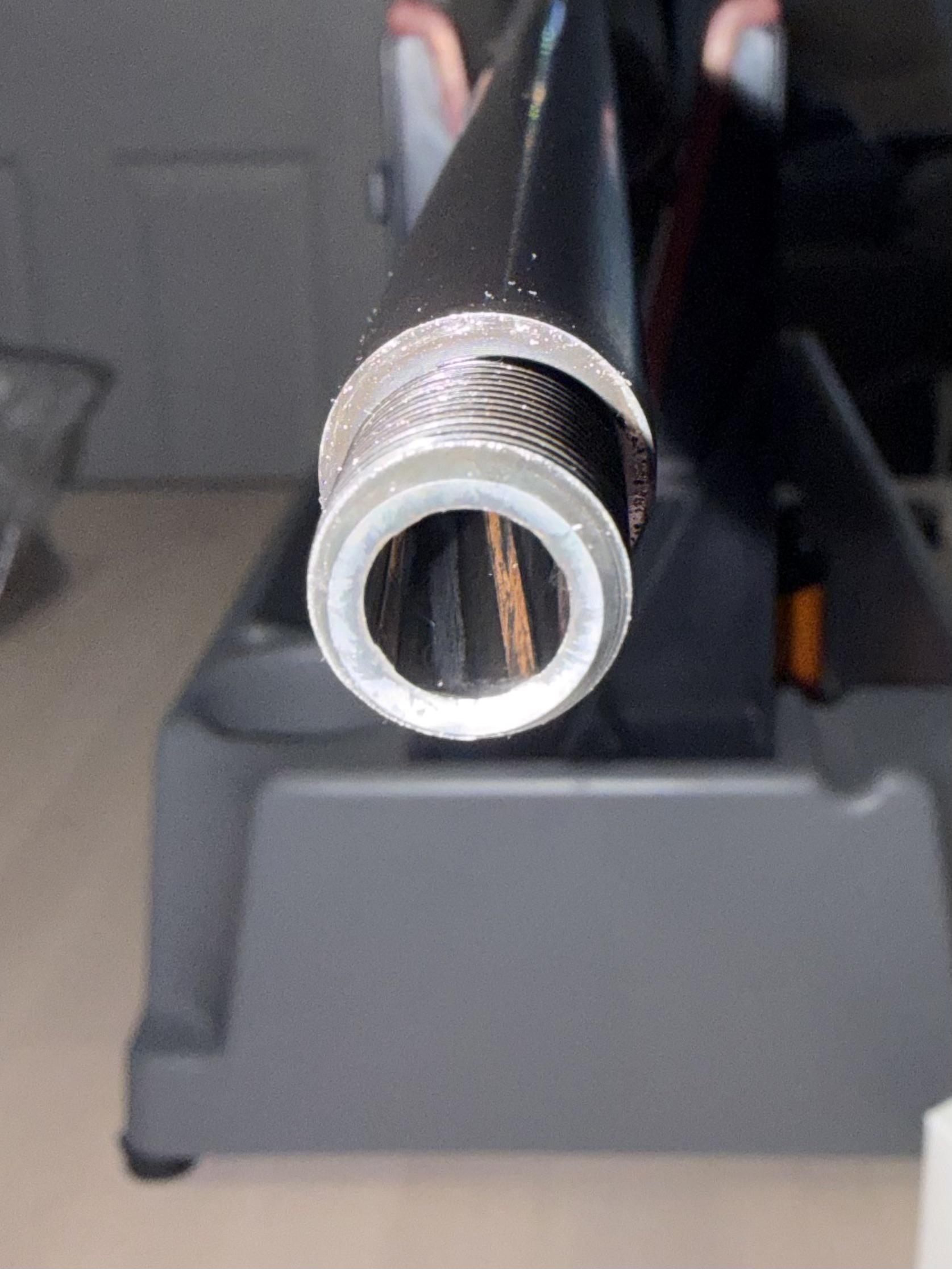
Hey folks, anyone able to help me with determining whether or not this is copper fouling or rust? The first time I shot this gun it rained on me, and it’s possible I didn’t get all the moisture off of it. I just cleaned the bore and ran an oiled patch through.
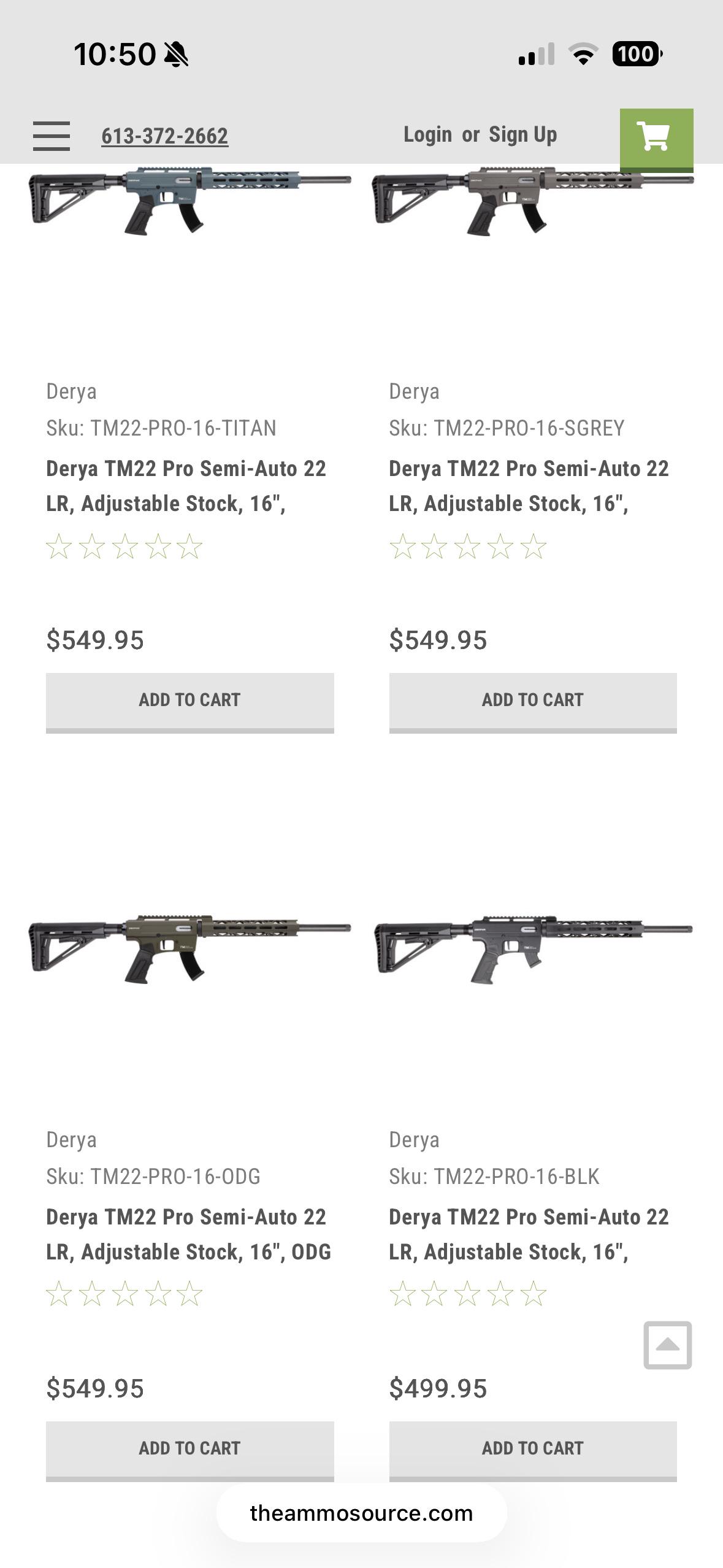
I’m kicking myself right now. So about a month ago SFRC had a big sale where the 18” Derya went on sale for $499 and I jumped at it, but now I’m trying to figure out hand guard BS to get the faux suppressor on it.
As I mentioned in a previous post, I recently purchased my first firearm, a Ruger 10/22. I’ve seen mixed opinions online about whether or not a gun fresh out of the box needs to be cleaned and lubricated. Some people say they’ve had no problems shooting it right away without doing anything to it.
I have an antique Gras infantry rifle that was converted to a 12 gauge shotgun sometime in the 1890s, it was my great grandfathers duck gun. 2 weeks ago my brother used it to kill himself. It’s currently in OPP custody. I’m torn between letting the cops keep/destroy a family heirloom versus keeping something that is a stark reminder of the worst day of my life, my father understandably never wants to see it again and my other brother wants to keep it and destroy it himself
Why not do some improvising? Introducing my redneck brass catcher. I'll be trying it out on the Derya nine millimetre, as well as the TM22 and some lever action guns soon.
I hadn't been to a Sail in years and was in the area so I stopped in. Some decent hunting gear there, and a large selection of guns, but like 90% bolt action rifles. Figured I'd grab some ammo. Grabbed 2 boxes of Challenger 12g buckshot, and a box of Blazer .22lr. Wanted to grab some 7.69x39 but they only had fancy Hornaday stuff for like $2 a shot.. Definitely not somewhere I'd shop regularly, but I almost forgot they existed.. Surprised I never hear them mentioned here at all.. Anybody here shop at Sail? Any reason not to?
Upon receiving my 1301 Mod. 2, I noticed it didn’t come with a Velcro receiver card, and I was wondering if it was supposed to. I ask because my A300 Ultima Patrol came with one.
Normally it wouldn’t be a big deal, just slap some Velcro, but the one included with the A300 UP was laser cut to match the receiver outline perfectly. If the 1301 isn’t supposed to come with one, that’s a little disappointing considering it’s Beretta’s higher end model.
this is for a bison hunt in Saskatoon and down the line moose and elk I have been wanting to know how is the action feel reliability etc i love the case hardened look but do not want to overly pamper it just basic maintenance like oil etc
Sorry if this isn’t allowed, I hardly ever use Reddit so I’m not super familiar with the posting norms or whatever.
I was just curious if anyone knows anything about the possibility of any stores restocking any variant of the SKS, even the ATI stock one.
I know cabelas website had them up until maybe a month ago? I’m curious if they’ll ever restock.
I don’t own an SKS but I own a handful of rifles and shotguns. I’d like an SKS, but I genuinely don’t care that much about the condition or the numbers matching aspect of it, hence why I considered the Cabelas ati stock one.
Thanks a bunch and sorry again if this post isn’t formatted perfectly, been lurking this sub for months but never posted.
The mag pouches are 3d printed, 2 different designs put together. The part that attaches to the belt from one model for a different style of mag, and then the 10/22 mag part from a different model with a smaller belt attachment that didn't fit.
Did my course with just regular mags stock rifle. A little awkward to get the mags out.
So for the first match I added an extended release, and designed some extensions for the mags.
The extensions have a little clip that screws into the extension, and holds onto the little finger divot on the mag, then I also just glued them to the bottom. Much easier to manipulate, and the finger hole makes it pretty nice to pull out of the holder. The extra weight makes them drop nice with the extended release.
Only used them on grass, they held up fine there. I think if you were dropping them on harder surfaces they'll eventually get beat up. I played around with a rubber sleeve over it, probably try them when we move indoors for the winter. Seemed like they help up OK but only tested those in the garage.
Recently purchased an ss-211 cos its hilarious, but my best option for something short enough/with enough punch to stop a Grizzly. I live in a fairly small town in BC, and we are lucky enough to be surrounded by crown land however, there are a shit ton of grizzlies and with the amount of close calls/time I spend outside I figured something besides bear spray would be a good investment. My question is this:
Is it safe to carry this thing loaded with safety on in a belt holster? If not, what are some other options/safe bets that allow reasonable deployment time as well as a safe carry option when hiking through rugged terrain.