r/canadaguns 1d ago

Shitpost / Memes Winchester Model 1894 Appreciation Post
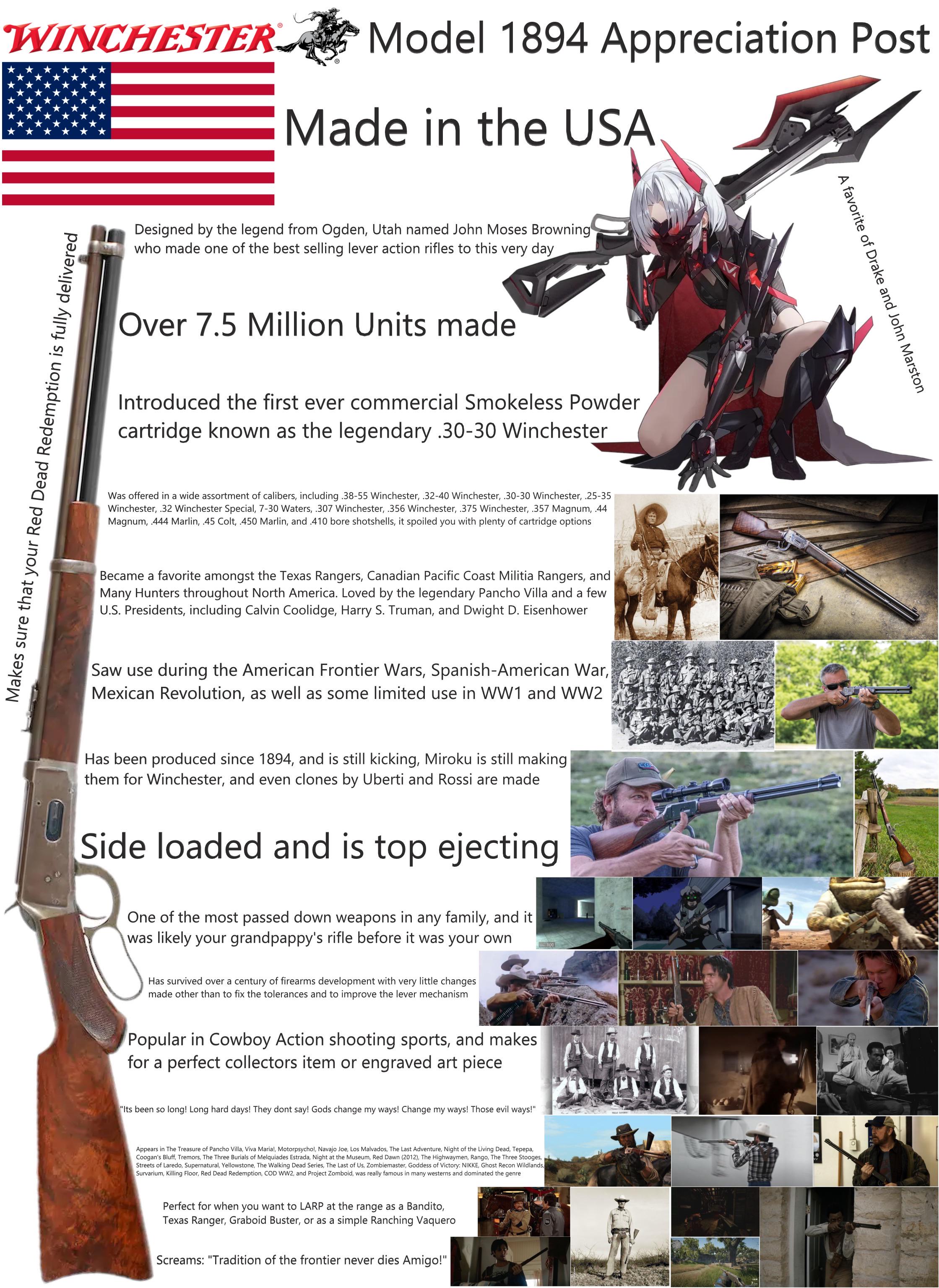
Post image

Howdy Folks!

The Texan is back with yet ANOTHER Gun Appreciation Post, where this time, we got ourselves a classic, and yes this does have Canadian Lore to it funny enough!

Not only was it (and still is) a popular rifle for hunting, it was also issued to one of the regiments in Canada during WW2 on the Pacific Coast, in particular for British Columbia, when there was the fear that the Japanese could possibly land on Canadian Soil (Which thank goodness it did not happen).

Everyone really does need a lever gun in their collection, and let’s be real, you probably have one of these after getting your PAL, since it’s one of the more common acquisitions that anyone will get. It also could’ve been your Grandpappy’s gun, so take good care of it!

Anyways! Enjoy!

19 Upvotes

17 comments sorted by

View all comments

Show parent comments

2

u/Q-Ball7 In the end, it's taxes all the way down 1d ago

the enfields they were originally issued were too big to use effectively in the thick brush we have here on the island.

Yeah, I definitely can't imagine how a rifle with a high rate of fire and a cartridge that's very similar to 7.62x39 would be any good in forest or jungle warfare at all.

2

u/Weak-Swordfish7370 1d ago

Apparently the story is the guys who stayed home didn't like how heavy it was and wanted a better rifle to hunt with so they approached the military asking for a replacement. Plus the enfields were needed overseas so the military started looking for american made rifles. They got winchesters and marlins

2

u/IntroductionAny3929 1d ago

It’s also why in 1982 Canada started looking for a replacement when the country officially constitutionalized. Because the C1 FALs were primarily something of a Commonwealth Matter, Canada of course needed to start improving its domestic production. Hence where we have Diemaco (Colt Canada), where there was the Colt 715s, and then because Canada is right next to the US, the supply chain and parts network for the C7s and C8s made more sense logistically.

(Don’t worry, I am aware that Canada became a country in 1867 and identity starts there, this is for the historical context)

So basically the Model 1894s are a similar story too, where Canada needed something that was not a logistical challenge as you would have to wait just to get your Lee Enfields supplied. (which also fun fact, Savage made Lee Enfields as part of the Lend Lease Program to help the supply chain more, and also if yours says “Property of US Government”, they you my friend have a Savage made Lee Enfield.

2

u/Q-Ball7 In the end, it's taxes all the way down 1d ago edited 1d ago

I am aware that Canada became a country in 1867 and identity starts there

Canada has never been a truly independent country (the closest it came to that was from 1980 to around 2015, hence why Boomers vote Elbows Up) and the best example of that is its military procurement. There are two more famous example of this thinking (being the Ross in 1910 and the Arrow in 1950); but here's another to think about.

The FAL was an obsolete rifle 15 years past its sell-by date and Canada should never have adopted it. But Britain wanted its colonial forces armed (especially if it wanted to bring them along into a potential war with Russia), and .308's a good cartridge to do that with (France did this first with 7.5 French; .308's just a bit hotter).

Once Canada left the British orbit and entered the American orbit, we get a Canadian branch of a then-American company setting up to produce American military rifles 20 years after serious development had concluded on them, with the explicit intention of having Canadians fight American wars.

If we were a real country, we would have followed the Dutch and the Portugese example and gone with the AR-10. If we had done that, we'd still probably be using them- they're an excellent rifle for defensive and peacekeeping applications [and if there's any truth to a "Canadian identity", it's that posture], so much so that other countries are still adopting them today.